Air Conditioning
Water heater replacement is one of those home projects that’s easy to put off. The unit is still working, sort of, so why rush? The problem is that holding on too long rarely saves money. More often, it quietly costs you more, in energy bills, repair calls, and eventually a much bigger emergency than you bargained for. If your water heater is getting up there in age, here’s what you should know before that decision gets made for you.
When “Working Fine” Is a Little Misleading
Most traditional tank water heaters are built to last somewhere between eight and twelve years. After that window, the internal components start to wear. The anode rod, which protects the tank from corrosion, depletes over time. Sediment builds up at the bottom, especially in areas with harder water like much of the Raleigh and Durham region. That sediment forces the unit to work harder to heat the same amount of water, and that extra effort shows up on your utility bill every single month.
A water heater that’s running past its prime isn’t just inefficient. It’s increasingly unpredictable. We’ve seen units in Cary and Apex homes that looked fine from the outside but had significant internal corrosion. By the time rust shows up in the hot water at the tap, the tank itself is often near failure.
The Repair Trap
One of the most common situations we run into is a homeowner who has repaired the same aging unit two or three times in recent years. A new heating element here, a pressure relief valve there. Each fix seems reasonable on its own, but the costs add up, and none of those repairs address the fundamental issue: the unit is old and declining.
A good rule of thumb is this. If a repair costs more than half of what a new unit would cost, and the existing water heater is already past the ten-year mark, replacement is almost always the smarter financial move. You stop throwing money at a losing situation, and you get a fresh start with a more efficient system.
What Failure Actually Looks Like
A water heater that fails on its own schedule rarely does so at a convenient time. We’ve responded to calls from homeowners in Holly Springs and across the Triangle area who woke up to a flooded utility room, a garage, or a finished basement. A standard 40- or 50-gallon tank holds a lot of water, and a failed unit can cause significant damage to flooring, drywall, and anything stored nearby.
That kind of emergency involves more than just a plumbing bill. It can mean water damage restoration, mold remediation, and a lot of stress, none of which would have happened with a planned replacement. Our 24/7 emergency service means we can respond when something goes wrong, but we’d much rather help you get ahead of it.
The Case for Replacing Sooner Rather Than Later
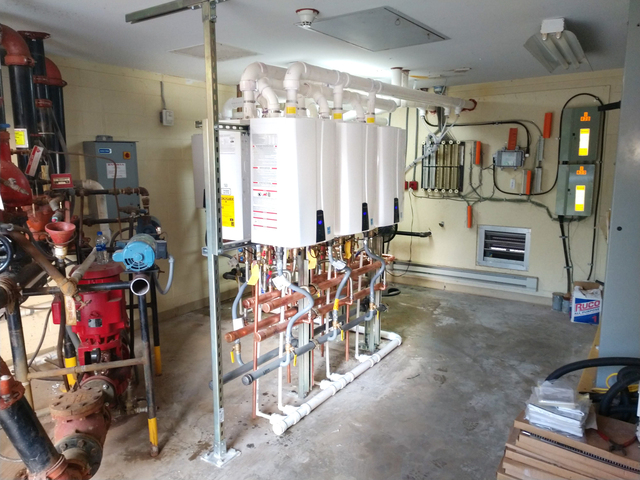
Newer water heaters, whether you go with a traditional tank unit or a tankless system, are meaningfully more efficient than models from ten or fifteen years ago. For many households in Raleigh, Durham, Cary, Apex, Holly Springs, and surrounding areas, the energy savings from a modern unit can offset a good portion of the replacement cost over time.
There’s also the peace of mind that comes with a fresh installation. A new unit, properly sized for your household, means reliable hot water, no surprise leaks, and years before you need to think about it again. Our team has been doing this work since 1925, and we’ll be straightforward with you about whether repair or replacement makes more sense for your specific situation. That’s always been how we operate.
Signs It’s Time to Have the Conversation
You don’t have to wait for a crisis. A few things worth paying attention to include water that takes longer than usual to get hot, rusty or discolored hot water, a rumbling or popping noise from the tank during heating cycles, or visible moisture and corrosion around the unit itself. Any one of these is worth a call to a plumber.
We serve homeowners and businesses across Raleigh, Durham, Cary, Apex, Holly Springs, and the surrounding Triangle area, and we’re always happy to take a look and give you an honest assessment. If you’re wondering whether your water heater is living on borrowed time, please give us a call or drop us an email. We’re here to help you figure out the right next step.